Project - Treadle Lathe
One of my decisions early on in my amateur woodworking journey was to avoid as much in the way of power tools as possible. This has led to some…interesting…issues. I am an amateur. I don’t have the muscle memory those with years of experience do. My hand cuts are crooked. I’m also not able to buy nice saws so I’ve been using discount handsaws that are horrible at best.
But I’ve reached a point where I’m happy with what I’ve been able to accomplish. I’ve a workbench that is sturdy and several storage compartments for my various handplanes. A hanging rack for my saws and squares and etc.
But now I really want a wood lathe. I’ve wanted to turn wood for years. But the cheap lathes you can get at Harbor Freight are, well, cheap. And small. And electric of course.
Enter the treadle lathe. A foot powered belt driven lathe that makes use of a flywheel to maintain RPMs. After doing a bit of research, I settled on Mike Adams’ design, which is in turn based on a few other’s whose names I do not recall off the top of my head. Also, it helps that his plans are free whereas the others are not. Yes, I am cheap. Look at the economy today and try to explain to me why I shouldn’t be.
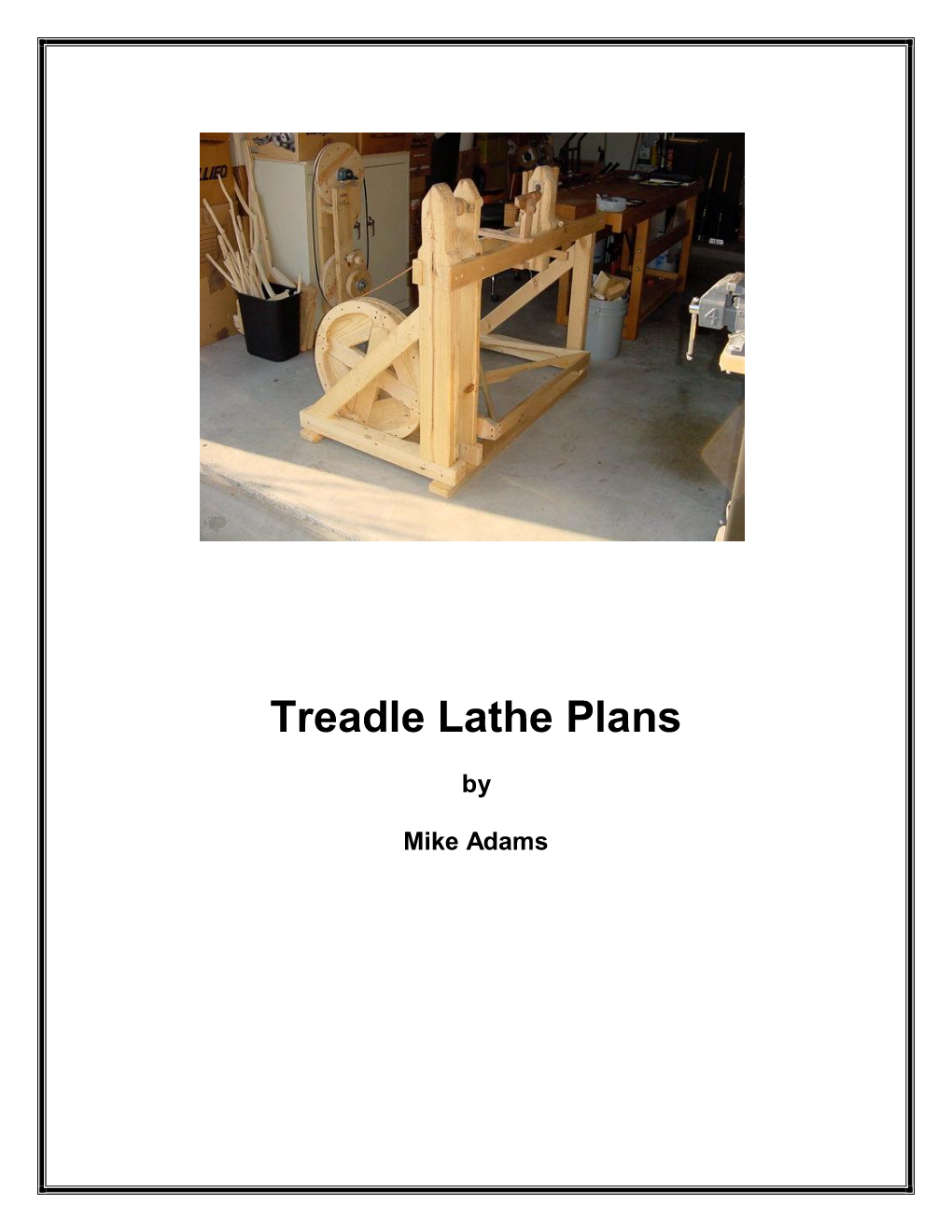
The only issue I have is that his plans are, actually, quite rough. More a list of thoughts organized in a pamphlet with some dimensioned drawings. And the drawings, while very well done, did not scan well. My primary work is as a designer and drafting takes up a good chunk of that time. I can recognize when someone hand drafted with some skill, and I’d say Mike’s drawings qualify. But he lacks a few necessary dimensions that I’m sure were minor overlooks, and some of the dimensions between elevations and plans do not jive together. Or it’s a list of text that you get to decipher.
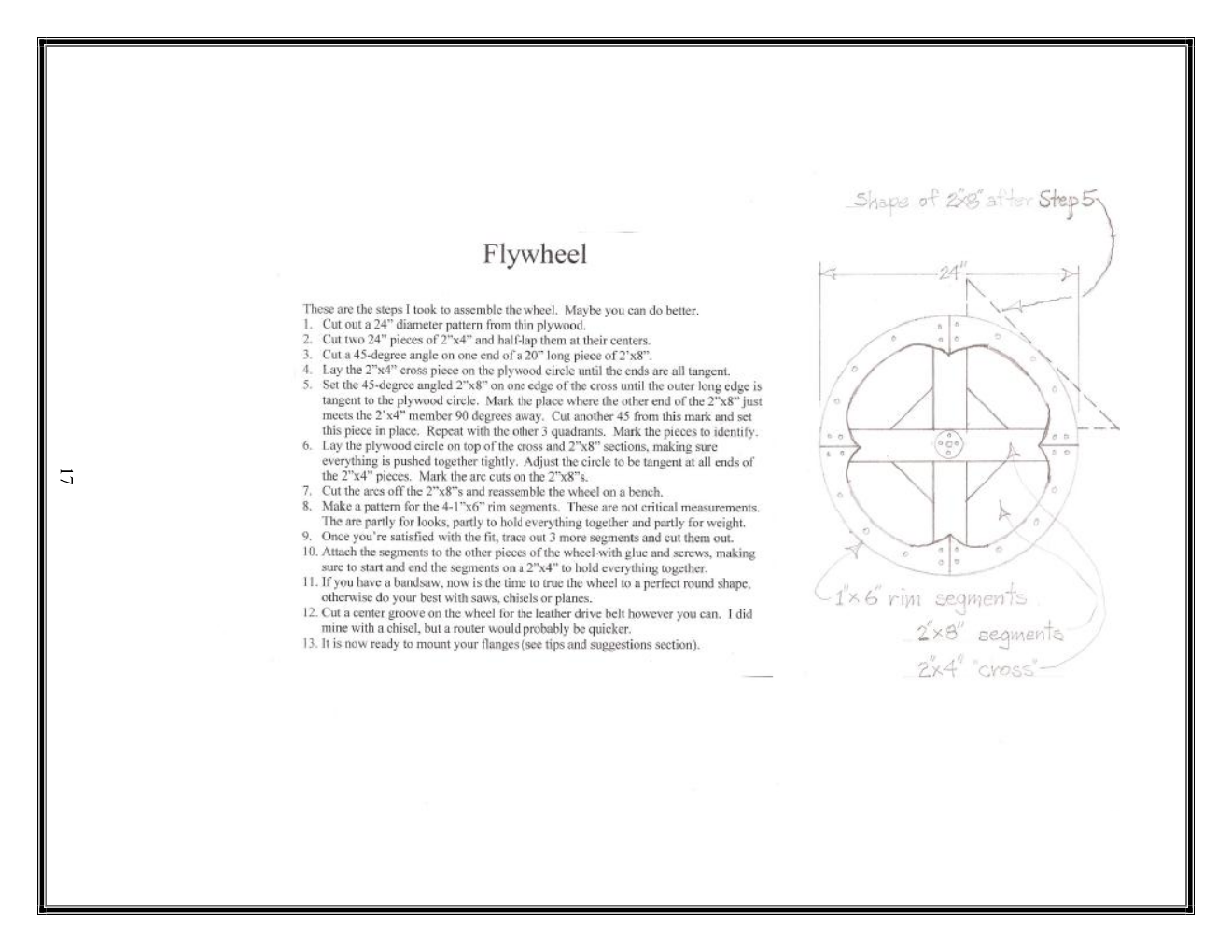
So the first step was to clean up these drawings a bit and split the parts out into a billing schedule so I wasn’t second and third guessing part sizes and cuts. As I said, Mike’s drawings were quite good already, so this chore didn’t actually take too long. Here’s the flywheel details I completed.
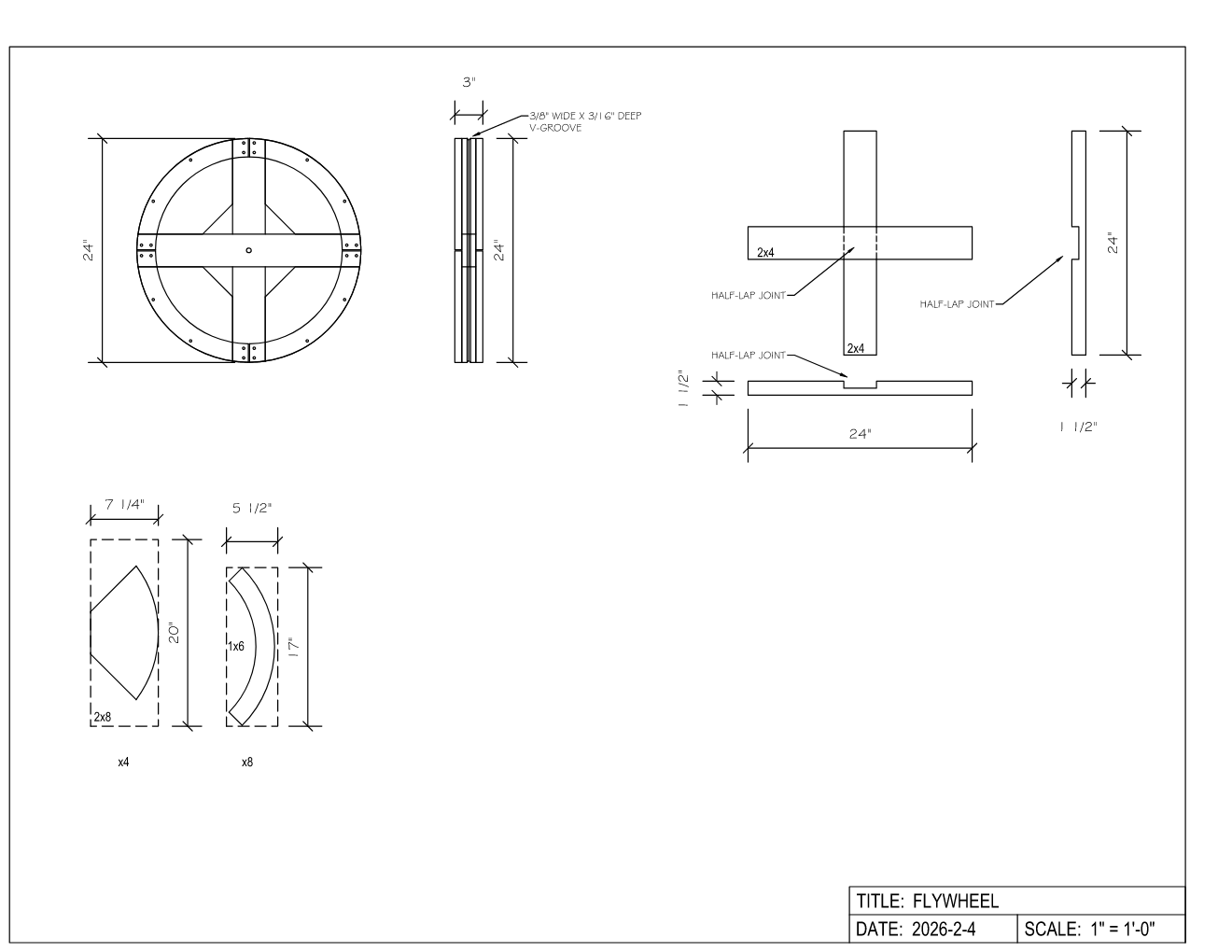
Mind the framing, DWG to PNG does not play nice. But as you can see, the drawing itself is more detailed and begins to uncomplicate a simple construction. I think an exploded isometric would do well to clarify the construction, and then yes, some extra steps in text.
I do have a rough wheel made, again all hand tooling so it isn’t a perfect circle. I’m hoping that doesn’t bite me later. Else I’ll have a relatively expensive firestarter on my hands. One thing I did differently that I think is what is causing me hate and discontent was to precut each filler piece on its curve, which in turn caused a little bit of misalignment. As a result, my wheel is about 23.625” in diameter instead of the 24”. I don’t think that is going to make a huge difference, but that is yet to be seen. If I have to build the wheel again, I would do it as Mike did and cut the final circle at the end, probably with a hand router because that was a massive undertaking with a handsaw.
The groove I hand cut with a chisel and is square instead of V. I’ve yet to purchase a belt, but as I recall leather sewing machine belts (what Mike recommends) are relatively flat anyway. The groove would be yet another thing I’d figure out how to do with a router as the chisel cutting was tedious and slow and not at all rewarding when I finally finished.
I do not have photographs of said wheel at the moment…it is resting under a pile of dimensional lumber cutoffs while I work on the rest of the frame that will support it. The one addition to this I would like to make is steel strapping around the circumference to add weight and structure. The wheel right now is probably ten or twelve pounds, which is at the very lower end of what I’d need to keep RPMs going. Adding in even 1/8” thick by 3/4” wide straps on both sides of the belt groove will add close to five extra pounds to the wheel.
If this works the way I hope it will, I’ll have a lathe able to do decent sized turns and it will have cost me just a few hundred dollars in materials and time, vs the thousands of dollars a decent large lathe goes for. And it’ll be good exercise.